No humble Pi for coding campaigners
The £22 PC is off to a flyer - and its timing couldn't be better says Johnny Minkley
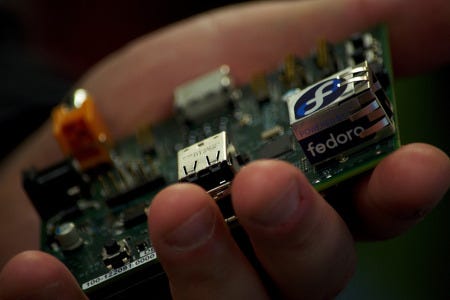
If you picked up a national newspaper, or tuned into a major news broadcaster over the past few days, it will have been hard to miss the excitable reporting of it.
Even the most obdurate antagonists of video games, such as the Mail, the Metro and film critic Roger Ebert, hailed the arrival of the £22 credit card-sized PC expected to inspire a new generation of game designers.
Naturally, much of the coverage outside the games media did not lead with the gaming angle -Raspberry Pi's mission to get kids coding takes in a wide spectrum of industries, from visual effects to banking and beyond.
But, whether it's Frontier chairman and Raspberry Pi trustee David Braben taking to the airwaves to extol the virtues of programming, or the indefatigable Ian Livingstone pestering the Government into backing the teaching of it, the media hype and consumer hysteria surrounding Pi's launch has marked the latest success in a broader campaign in which the games industry has played the defining role - and from which it now stands to reap the rewards.
It's worth reflecting on how startlingly well the planets have aligned here. Raspberry Pi arrives three months after the 30th anniversary of BBC Micro, the computer that sparked the coding craze of the '80s, and not quite two months since Michael Gove, the Education Secretary, announced plans to ditch the teaching of "dull and demotivating" ICT in favour of programming in UK schools - the main recommendation of last February's Livingstone-Hope Next Gen report.
Meanwhile, on the 30th anniversary of the BBC's Computer Literacy Project, early details have emerged of the corporation's own "BBC Micro 2" initiative, a development platform understood to be tied to a new series of supporting educational broadcasts designed, again, to help children learn to code.
With an intoxicating mix of amazing new technology and timely nostalgia for the 'good old days', sharpened by bleak visions of Britain's technologically handicapped future, it's little wonder the story caught on.
As clever as it is, Raspberry Pi, six years in development, could have ended up as little more than an eccentric novelty had it emerged in a different climate. Now, the goal to get one into the hands of every British school kid seems a lot more plausible with coding set to return to the classroom.
"With an intoxicating mix of amazing new technology and timely nostalgia for the 'good old days', sharpened by bleak visions of Britain's technologically handicapped future, it's little wonder the story caught on."
Equally, in the case of the Livingstone-Hope report, what could have been idly dismissed as special-pleading gained serious weight when Google chairman Eric Schmidt was persuaded to commit the tech colossus to the cause.
Where the Government could have ignored the games industry, it was already in bed with Google - literally in the case of David Cameron's outgoing strategy guru, Steve Hilton, married to Google's public policy chief, Rachel Whetstone, the couple also acting as godparents to Cameron's late son, Ivan.
The Next Gen Skills "coalition" craftily spun together by Livingstone and his team thus ensured the lobbying operation gained irresistible momentum following Schmidt's widely-reported intervention during a speech in Edinburgh.
In an industry still paranoid about its public image, the games industry's contribution to the new coding revolution could do a great deal to help change perceptions for the better.
I recently chaired a debate at BAFTA during which two of the panelists, UKIE CEO Dr Jo Twist and Rebellion co-founder Jason Kingsley, clashed over the thorny issue of diversity in the workplace, which extended out into an impassioned discussion with the audience.
If we want more diversity in games development, then democratising and destigmatising the paths to entry seems like a good place to start. "Who says kids want to code?" is the main criticism levelled at Raspberry Pi. And, sure, many will not take to it or be that interested in it, just like any other subject.
But by exposing as many children as possible to computer science as a routine part of their education - rather than sidelining it as impenetrably weird to most, the preserve only of the saddest geeks - you create an environment in which talent and passion can flourish naturally.
Children should, of course, be empowered to experiment with programming and play around with the things they are already passionate about - which, in many cases, will be games.
With affordable, durable hardware such as Raspberry Pi, kids can learn the basics in school and carry on at their leisure using kit which, unlike regular PCs, has been designed to encourage imaginations to positively flirt with failure by removing the fear of breaking anything irreparably. Rather like the computers of the '80s, in fact.
A further potential benefit is in tackling the shameful state of numeracy amongst school leavers. Less than 60 percent achieved at least a pass at GCSE level last year, and 20 percent of 11 year-olds in England failed to meet basic standards in maths.
Plainly, a lot of children find traditional methods of teaching maths to be as fun as having a tooth pulled. Titles such as Dr Kawashima's Brain Training have in recent years inadvertently shown the valuable role video games can play in "stealth learning", turning simple sums into an enjoyable activity. When my niece was eight, it was her favourite game because it made her homework easier.
Meanwhile, professional game makers bemoaning the sharp decline in students taking up computer science courses at university understandably point to the failure, all the way down to primary school age, to articulate the importance of core subjects like maths and physics in the making of video games.
"Wouldn't it help kids who love games but hate doing sums to know that the latter is essential to the creation of the former?"
Wouldn't it help kids who love games but hate doing sums to know that the latter is essential to the creation of the former?
Art, it should be stressed, is also important in this equation - and the Livingstone-Hope report rightly called for young people to be "given more opportunity to study art and technology together." It's a marriage of disciplines that has worked out quite well at Apple, after all.
In the modern world, where computers control everything from the world's financial systems to "smart" fridges, developing an understanding of how they work is clearly of more value than simply boring children with a few specific examples of what they can do, according to the existing ICT model.
That's not to say learning how to use important software and apps isn't important. Rather, it's like learning to read without learning to write, as Ian Livingstone memorably phrases it.
It'll be years before a detailed picture of how successful this conscious campaign to recapture the spirit of the '80s proves; and there are many obstacles along the path to reform, not least the challenge of teaching the teachers.
Exactly what shape the new approach to computing in schools will take after consultation remains unclear. I understand that, after a meeting of key stakeholders at UKIE's offices this week, there are serious doubts about being ready by September, for instance.
Aside from philosophical considerations of course content, there are also the practical issues of IT logistics within each school. What new software is needed? How will it be paid for? None of this is trivial, and it means headaches all round in the short term. But the broader course is now set.
And the political and industrial will behind it, in tandem with genuine enthusiasm from the public, gives it a fighting chance - with emerging grassroots initiatives, such as Games Britannia, only serving to help.
More broadly, the process of transforming the teaching of computing may also help change the perception of the greater role our medium can play in society. And for some in the games industry, that may be the greatest education of all.

I was raised on Commodore and Spectrum, then Amiga and PC. At School we learned computing as a core subject and had a lab full of spectrums for an after school computing club. I even remember the name of the teachers who taught me Dr Rose the computer teacher and Mr Swift who also taught electronics as well as running the computing club.
These were times when intellect grew at the hands of teachers who embraced the new technology with enthusiasm that couldn't help but be passed on to me and my fellow students.
If there is even a chance of bringing back that level of learning and joy in knowledge then we have to grasp it with both hands. The pi is definitely a step in that right direction.
Posted:A year ago