Tech Focus: The Next-Gen Challenge
Will next-gen consoles really produce Avatar quality visuals? Digital Foundry investigates
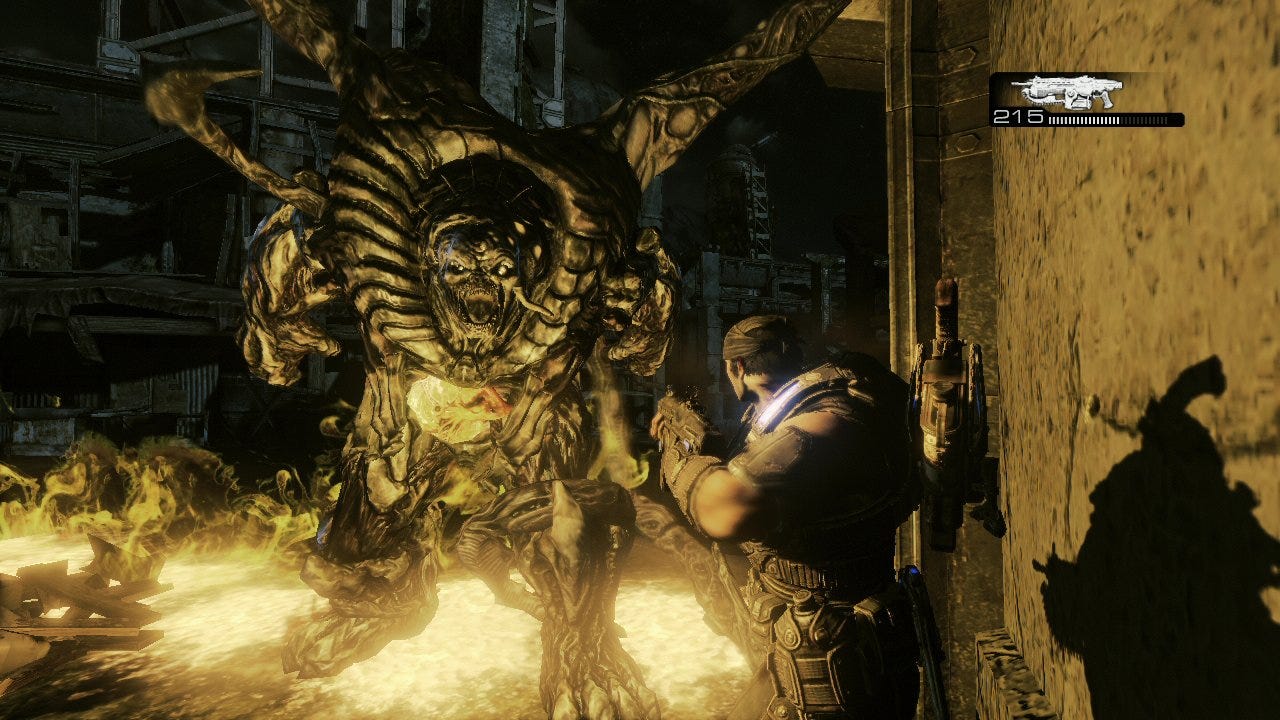
Yesterday's arrival of Epic's excellent Gears of War 3 represents a crucial landmark in the ongoing story of the current generation HD consoles; a stunning demonstration of first party technical quality achieved with a multi-platform middleware. Not every game will benefit from Epic's level of experience or enjoy the same colossal development budget of course, but the fact is that the core tools are there for third party publishers to produce video games that represent the current console state-of-the-art.
If we have now reached a point where this level of visual quality is available to anyone looking to license Epic's tech - or indeed Crytek's superb CryEngine 3 - then is there really any actual need for the next-gen consoles we fully expect to get their debuts at E3 2012? Just what can the new hardware add to the gaming proposition, and in the here and now, how are developers preparing for the next wave of hardware?
What can new console hardware add to the gaming proposition and in the here and now, how are developers preparing for the next wave of hardware?
When asked the next-gen question in a recent interview with VG247, Cliff Bleszinki replied very simply: "The graphics aren't good enough yet, goddammit. And anybody who says they are is full of shit... I want to see Avatar in real-time, and I want to see beyond that. Gears 3 looks outstanding, and the new Modern Warfare and Battlefield look great, but we can absolutely do better."
Avatar-level graphics running in real-time is certainly a lofty goal, first proposed by Director of ISV relationships at AMD Neal Robison, in an article for the US Official Xbox Magazine, but since then others have mentioned it as the aspirational standard for next-gen visuals.
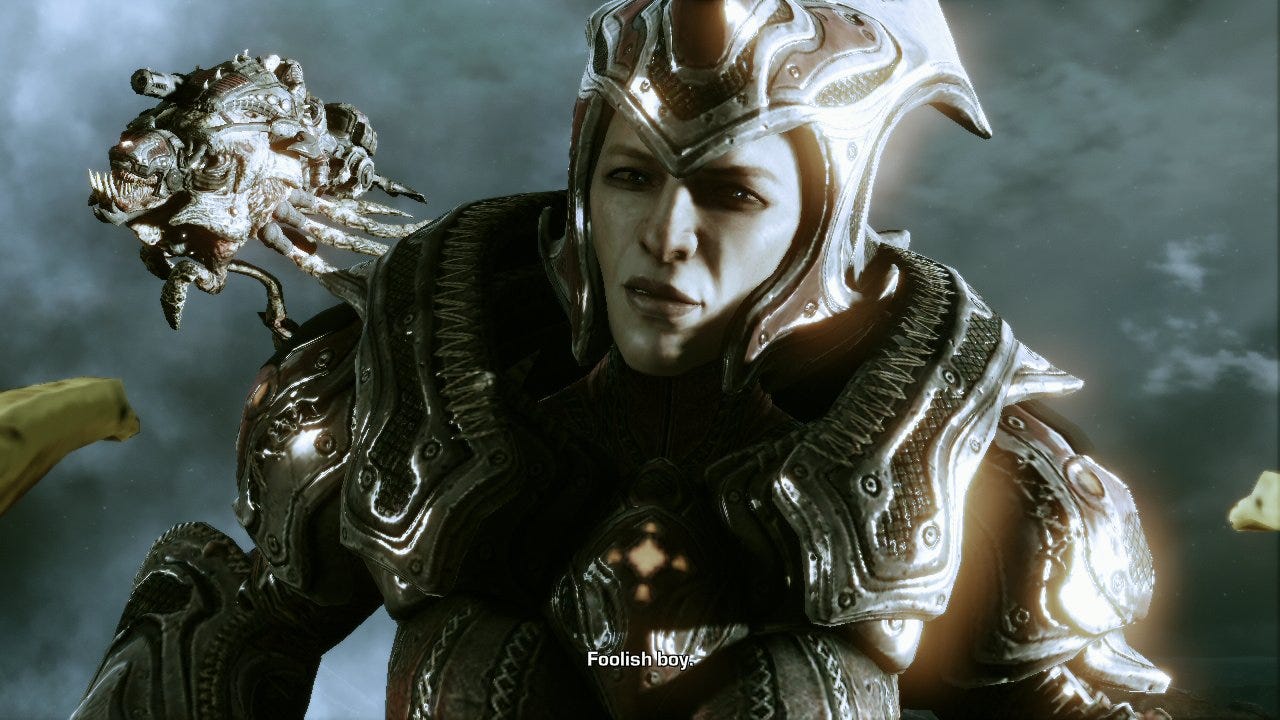
Gears of War 3 is up there with the very best first party console exclusives. These shots were generated in real-time by Unreal Engine 3 and represent an enormous leap over the quality attained in Gears of War 2.
"One of our rendering guys was looking at that article and was saying he reckons that's doable now with DX11 on PC," Crytek UK principal programmer Pete Hall said to Eurogamer, "I get the feeling it could happen. It could be next-gen consoles. It does feel like if we're able to keep pushing DirectX 11 into the next generation of consoles we should be able to produce some fantastic stuff with CryEngine."
However, there is a definite sense that the Avatar standard is something of a buzzword and there's nothing substantial at the moment to back the claim. Epic itself has already released its own next-gen vision - the superb Samaritan demo - powered by Unreal Engine 3 and its new DirectX 11 extensions, utilising the processing might of three GTX580 graphics cores running in parallel. That's a mammoth amount of GPU power, but as Epic's Mark Rein rightly says - the high-end PCs of today are the consoles of tomorrow.
Avatar comparisons are perhaps a touch ambitious though bearing in mind that even running Toy Story in real-time on any currently available consumer-level hardware would be a seriously impressive feat. Consider this fascinating article on the make-up of the Weta Digital server cluster that processed Avatar's CG: we're talking about 34 racks of servers, each with four chassis of 32 machines - 40,000 processors and 104TB of RAM. Even then a single frame could take several hours to render. We are decades away from this level of rendering power being available in a home console.

Avatar's CG required a mammoth server farm utilising 40,000 processors, sometimes requiring hours to produce a single frame. While the aesthetic may be approximated, it's supremely unlikely that next-gen consoles will be able to match current Hollywood CG.
Put into perspective like that, the notion of that level of CG fidelity running on a next-gen games console seems like little more than a pipedream. This is not to say that the new consoles will not present a massive improvement over what we have now, and Epic's Samaritan vision along with the capabilities of the hardware that runs it is in line with what other well-informed industry prognosticators are saying we can expect.
"The next-generation will be here soon, in a couple of years. That's going to be that much farther beyond that. It'll be another ten times as powerful as this," John Carmack told Eurogamer, moving on to raise further questions on just what form the next-gen advantage will actually be bearing in mind the visual fidelity we see now.
"The better games get the harder you have to go to give a delta people care about. That's going to be a challenge for the next generation of consoles, to show that the pack-in title is going to look more awesome than what you get on the current ones that people will want to go spend $300 on a new console. They'll be able to do it on the next generation, but it's going to be much harder."
So what can we expect to see that will be so much better than what we have now? First up, let's take a look at the rather unexciting fundamentals. With 1080p now the established standard for HDTVs, with even lower end displays offering a "full HD" display, we would expect the base resolution of games to rise to match them, and we wouldn't be surprised to see some level of hardware assistance for stereoscopic 3D. Improved resolution by default will produce higher quality in texture filtering ensuring a far cleaner presentation all-round. In terms of textures themselves, we would hope to see an end to low-res artwork - assuming the new hardware offers up the levels of RAM that developers are hoping for.
Typically from generation to generation we have seen an 8x increase in RAM, suggesting a 4GB standard on the next-gen Xbox and PlayStation. However, memory is by far the most coveted system resource and a recent GameFest presentation from Crytek reveals that the developer is hoping for RAM in excess of 8GB for the next wave of consoles. Bearing in mind how strongly developers fought for the 512MB of RAM in the Xbox 360 over the initial 256MB spec, we would expect the platform holders to be considering requests like this very seriously, especially as the level of RAM has clear implications on the longevity of the platform.
Looking forward, we should also expect to see the raw power available for far more complex 3D modelling - a revelatory increase, perhaps. At the moment, even high-end PC games are mostly operating with relatively low levels of geometry compared to the raw potential of modern GPUs - models are produced to console standards and in many cases the PC only benefits through less aggressive handling of LODs and in some cases, DX11-powered tessellation - which dynamically increases mesh complexity the closer the object is to the camera. In truth, current gen PCs have an embarrassment of untapped power in terms of geometry processing and have possessed it for years - to a certain extent it's the reason that PC specific technologies such as NVIDIA 3D Vision and AMD EyeFinity came into being - to utilise this latent, untapped power.
In other areas, a CPU bump also opens up so many more opportunities in terms of animation, physics and AI. Carmack talks about the "delta" that makes people care about the next-gen - it's elements like these when integrated with the improved visuals that produce a proper revolution in the gameplay experience, and it's my contention that there's still a long way to go in these regards before we're anything close to a video games equivalent to the Avatar experience.
We are already seeing developers making the transition between generations via exploratory work with DirectX 11 - the programming foundation of next-gen console graphics cores
Already we are seeing some hints on how next-gen visionaries are planning for the future, albeit mostly through experimentation in the visual area. In the here and now we are already seeing developers making the transition between generations via exploratory work with DirectX 11 - the programming foundation we expect to see form the basis of the GPUs that will be used in the next-gen consoles. Crytek's work on upgrading Crysis 2 gives a small indication of the kind of effect that tessellation can make, also boasting significantly improved textures and effects like displacement mapping, parallax occlusion mapping, improved shadows, water and depth-of-field. While it can't be described as a revelatory improvement, the quality of the work is remarkable.
Battlefield 3's focus on DirectX 11 ensures a state-of-the-art PC product but it also represents elements of the next-gen work the rendering architects at DICE are working on.
Codemasters' EGO engine has also received extensive DX11 upgrades, radically improving the look of DiRT 3 in particular: while geometry is still fairly limited, running the game at 1080p60 with all DX11 enhancements active provides a vastly improved experience over the standard console builds: not quite what we would expect from next-gen quality as an overall package but a marked improvement nonetheless. At the very least it gives some hints as to how early next-gen titles may look - based on the rendering paradigms of today but beefed up with some seriously impressive new hardware and effects work.
We also see DICE making moves to address DX11 with its hugely anticipated Battlefield 3, which features a raft of technology choices we will see adopted on next-gen consoles. DX11 compute shaders power the stunning new tile-based deferred lighting system as well as the multi-sample anti-aliasing implementation, while tessellation is used to give a new dimension to the landscapes - there's a richness to Battlefield 3's environments on PC that the console builds clearly don't match. Post-processing effects should also benefit from the additional precision PC hardware offers, on top of the usual resolution and frame-rate benefits a suitably equipped computer gives players by default.
But are these enough to actually make people care in the way that Carmack talks about? With these technological improvements in the hands of today's game engineers, there's no question about it. Consider the absolute state-of-the-art of FPS titles on the last gen PlayStation 2 and Xbox: Criterion's genre-defining Black. Its gaming DNA can be traced directly to Battlefield 3, but the increase in fidelity in all aspects of the experience from the visuals to the physics simulation to the sheer immersion level is incredible. The technologies being developed now in the motion picture technology suggest that what DICE is doing with BF3 really is just the beginning: the more processing power available, the grander the scale of the simulation.
While the movie CG of Avatar remains the aspiration, Epic's Samaritan demo is perhaps our best indication of the kind of quality real-time visuals we'll see in the next-gen consoles.
In addition to that, Epic's Unreal Engine Samaritan demo gives us tantalising hints of how characters can "grow" with next-gen technology. In the demo we see people that look more realistic, that the audience can empathise more closely with. Just the tiniest details - skin shaders on the main character, for example - have been beautifully rendered, while interaction with the environments and the overall effects work help produce a world that is clearly a step beyond what we're experiencing in current generation titles. It's all in real-time and it's glorious - it's no Avatar but it is a realistic, mouth-watering taste of the future of gaming.
In the here and now, with the current generation console hardware, the state-of-the-art is all about ever more ingenious iterations of existing rendering techniques, cramming more effects, higher levels of detail and ever-more impressive artwork into mere milliseconds of CPU/GPU time. Gears of War 3 joins the ranks of illustrious titles such as Killzone 3, Crysis 2 and God of War III in pushing console hardware to its limits. They are absolutely phenomenal games - a clear step beyond their contemporaries - but just like Criterion's Black back in 2005, they are very much games of their generation.
How long this era will continue remains to be seen, but I strongly suspect the platform holders will be calling time during the keynotes of E3 2012...

Interesting piece Richard. Many thanks for putting that forward. I'd like to just add to your comprehensive review by pointing out that very clever use of middleware has had a large contribution to the rendering architects at DICE's work on the Frostbite 2 lighting solution for Battlefield 3. Geomerics' realtime radiosity solution Enlighten powers the global illumination that fills the scenes with light creating the infinitely believable and stunning visuals we've seen so far in DICE's released material. Enlighten is also powering up the visual quality to even greater levels in a number of new UE3 titles.
Posted:A year ago