Team Meat co-founder furious at freemium sales tactics
Super Meat Boy and Blinding of Isaac developer unhappy with mobile gaming sales trends
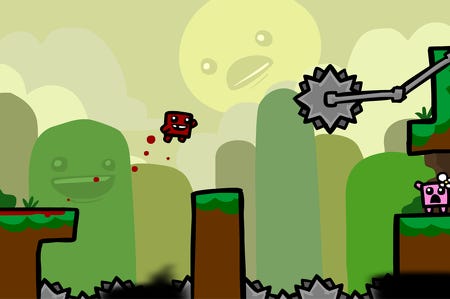

Edmund McMillen of Team Meat has lashed out against the current mobile gaming monetization schemes permeating much of the mobile landscape today. McMillen believes that there is a complete lack of respect by developers towards their customers, something that is inherently breaking the values that game developers should hold.
"There is an ongoing theme these days to use a very basic video game shell and hang a 'power up carrot' in front of the player," said McMillen on his blog. "The player sees this carrot, and wants it! All the player needs to do is a few very rudimentary repetitious actions to attain it, once they get to it, another drops down and asks them to do more... but then the catch... instead of achieving these 'goals' by running on the tread mill, you can instead just pay a single dollar and you instantly get to your goal! Better yet pay 10 and unlock all your goals without even having to ever play the game!"
McMillen's words relate to a gaming trend in free-to-play monetization. The central idea of free-to-play is that gamers have the choice to pay for content within the game, rather than pay for a game outright.
"Words cannot express how f***ing wrong and horrible this is, for games, for gamers and for the platform as a whole... this business tactic is a slap in the face to actual game design and embodies everything that is wrong with the mobile/casual video game scene.
"I've gone off on a tangent a bit but what I'm trying to get at is, we are approaching development to [Super Meat Boy: The Game] with very open eyes, we want to make a game that WE would love to see on the platform, a feature length reflex driven platformer with solid controls that doesn't manipulate you with business bullsh*t in order to cash in."
"We want SMB:TG to show the player we respect them, not only by not manipulating them, but also by understanding they want a real challenge and they want a real sense of fulfillment when they have achieved something that's difficult... you know, like real games do."